
From Philadelphia to Paris: France, the Founding Fathers and the World Behind 1776
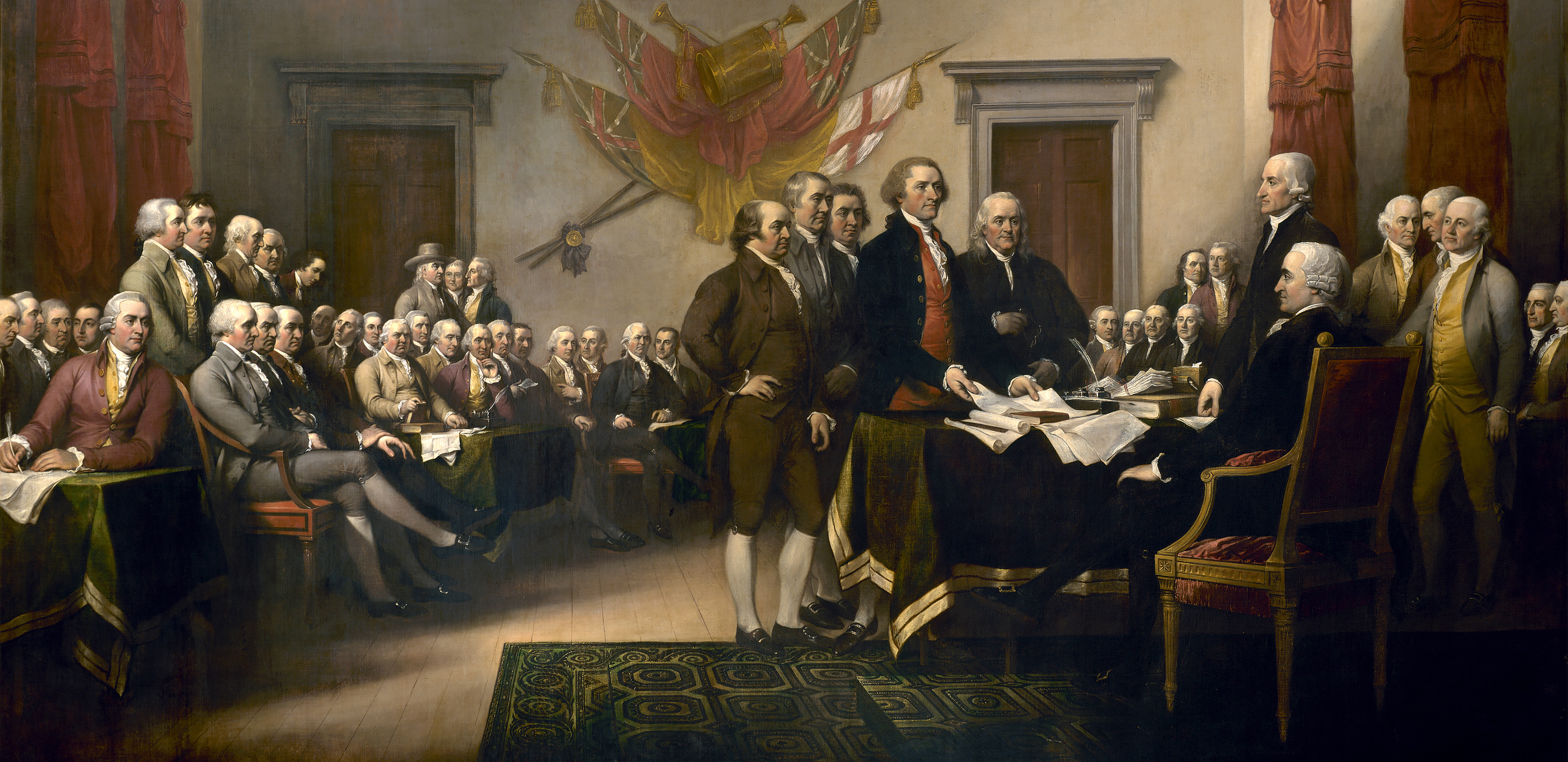
When audiences see 1776 on Ford’s historic stage, the Tony Award–winning musical that dramatizes the intense debates surrounding the signing of the Declaration of Independence, the focus is squarely on Philadelphia in the summer of that fateful year: stifling rooms, clashing personalities and an uncertain future for thirteen colonies.
But behind those heated conversations was a wider world—one in which France, Britain’s longtime rival, loomed large well before independence was declared. In fact, by the time John Adams sparred with John Dickinson and Thomas Jefferson struggled to find the right words, French diplomats, philosophers and covert agents were already shaping the revolution’s course.
Understanding that international backdrop adds a new dimension to the story 1776 tells.
By early 1776—months before Congress adopted the Declaration—French support was already flowing across the Atlantic, though in disguise.
Through a front company called Roderigue Hortalez and Co., France and Spain sent military aid to the colonies, including muskets, gunpowder, uniforms and artillery. These shipments were critical during the war’s earliest campaigns, when the Continental Army was desperately short of supplies.
Also in early 1776, Congress sent Silas Deane to Paris on a secret mission to secure weapons and military supplies. Deane quickly immersed himself in French political circles, working with intermediaries tied to Foreign Minister Vergennes and the Roderigue Hortalez and Co. Deane was also tasked with recruiting experienced European officers for the Continental Army—an effort that would bring figures like the young Marquis de Lafayette into the American cause. Although Lafayette would not sail to America until 1777, his early conversations with Deane illustrate how personal ambition, ideological sympathy and Franco-American networking were already intersecting before the Declaration was signed.
None of this appears directly in the production, but it forms an unseen backdrop to the musical’s central question: could the colonies risk declaring independence without knowing whether powerful friends would stand behind them?
In addition, several of the Founding Fathers already had ties to France before independence.
Benjamin Franklin, celebrated across Europe for his scientific experiments, had visited Paris in the 1760s and cultivated friendships in elite intellectual circles. Those relationships would later prove invaluable when he arrived in late 1776 to seek formal French support.
Other Americans, such as Arthur Lee, quietly tested French attitudes toward the rebellion. Together, these envoys laid the groundwork for the alliance that would follow once independence was officially declared.
Benjamin Franklin stands at the center of these early connections. By the 1750s and 1760s, Franklin was already famous across Europe for his experiments with electricity and in 1767 he traveled to Paris, where he was welcomed into fashionable salons and scientific societies. He mingled with philosophers, aristocrats and ministers, cultivating a reputation as the embodiment of New World ingenuity and republican virtue. When revolution loomed years later, those friendships—and his celebrity—made French officials far more receptive to American appeals for assistance.
The musical captures the human drama of a moment when nothing was guaranteed: colonies divided, armies untested and delegates unsure whether they were committing treason or founding a nation.
What the audience does not see—but what history makes clear—is that France was already hovering just offstage. The possibility of foreign aid, the spread of Enlightenment thought and secret diplomatic missions all influenced the stakes of the debate.
When Adams sings about independence being “anywhere but here,” or when the delegates worry about whether they can survive Britain’s wrath, those anxieties were real—and they were tied to a crucial unanswered question: would Europe, and especially France, eventually step forward?
Two years later, after the Declaration had transformed a colonial rebellion into a sovereign cause, France did just that, signing a formal alliance with the United States in 1778 and helping turn the tide of the war.
Seen in that light, 1776 is not only a story of domestic argument and political courage—it is the opening act in a global contest, one that connected Philadelphia to Paris and made American independence possible.
But the Declaration of Independence did not end the Americans’ engagement with France—it greatly expanded it.
Paris quickly became the most important diplomatic outpost of the new nation. Franklin remained there for years, joined by fellow commissioners John Adams and Thomas Jefferson, each of whom spent extended periods navigating French politics, negotiating loans and representing American interests abroad.
Adams, who arrived in 1778 and returned in the early 1780s, found French court life frustrating but crucial. He worked to secure additional financial backing and naval cooperation and later participated in diplomacy that helped bring the war to a close. Jefferson succeeded Franklin as U.S. minister to France in 1785 and immersed himself in French culture, architecture and political thought—experiences that would influence him long after he returned home.
Together, these men forged one of the earliest and most consequential foreign relationships of the United States. Their time in France helped establish American diplomatic practice, introduced European audiences to the ideals announced in the Declaration and ensured that the revolutionary experiment had powerful backing during its most precarious years.
In retrospect, the debates dramatized in 1776 were only the beginning. Once independence was proclaimed, the story widened from a room in Philadelphia to the salons of Paris and the halls of Versailles—where monarchs, ministers and philosophers weighed the fate of a republic that had just declared itself into existence.
Sources
https://www.bostonteapartyship.com/john-adams-diplomat-france
https://www.history.com/articles/benjamin-franklin-france
https://www.gilderlehrman.org/history-resources/essays/benjamin-franklin-spain-and-independence-united-states
https://connecticuthistory.org/the-rise-and-fall-of-silas-deane-american-patriot/
https://en.wikipedia.org/wiki/Roderigue_Hortalez_and_Company
