The Stories We Carry: Lessons for the Present, Gifts for the Future
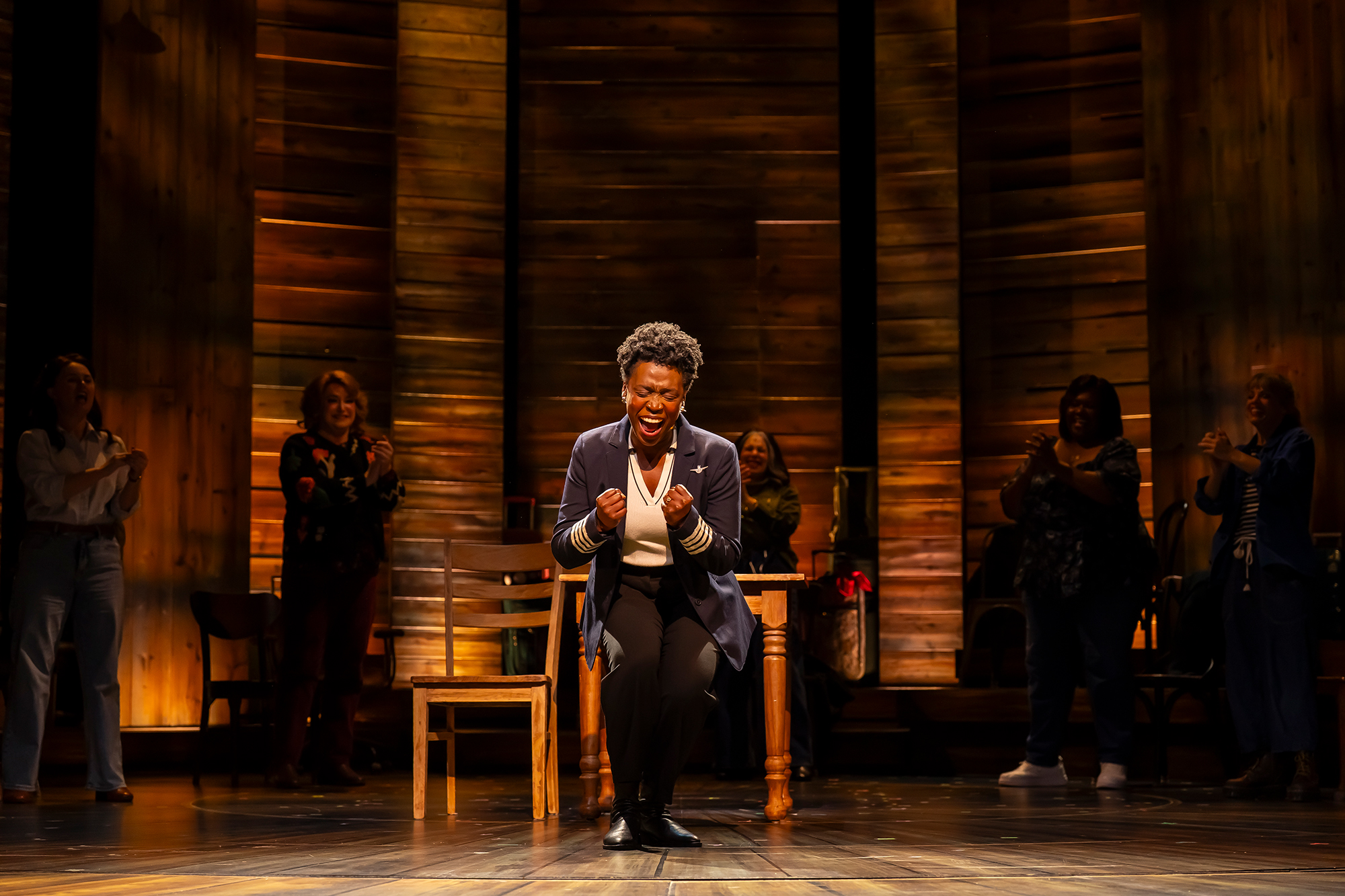
Have you ever wondered how real events, experiences and people’s stories are transformed into works of theatre that capture the heart and voice of a community? Plays and musicals such as The Laramie Project, A Chorus Line and Come From Away show how theatre artists can draw inspiration from interviews, personal experiences and real-life events to bring the stories of individuals and communities to the stage. In this lesson, students will explore Documentary Theatre and, more specifically, a form of it called Verbatim Theatre. Through interviewing a partner, students will practice active listening, observation and analysis as they identify key details, perspectives and experiences within another person’s story. Students will then transform their partner’s interview into a theatrical monologue, exploring how individual stories and perspectives can deepen our understanding of major events, their impact on communities and the history they helped shape.
Content area, grade range/level: This lesson is designed to be flexible. Please adjust the pacing, questions, supports and expectations as needed to best serve the students in your classroom.
Learning Objectives
Students will be able to:
- Gather and interpret information from an interview by asking relevant questions and identifying key details, experiences and perspectives.
- Identify sensory details, descriptive language, emotions and memorable moments that communicate a storyteller’s experience.
- Organize information from an interview into a clear narrative structure.
- Synthesize information from an interview into a theatrical monologue that accurately communicates the speaker’s experience and point of view.
Activities
Day 1 | Introduction to Verbatim Theatre and Gathering Our Stories
- Introduction | What is Verbatim Theatre? (10 min)
- Say: “Welcome to today’s class! Today, we’re going to explore a form of Documentary Theatre. Before we begin, how many of you have seen or heard of a documentary?”
- (Wait for students’ responses. If students share ideas such as, “It tells people’s stories,” “You listen to people talk about their experiences,” or “It tells a story about something that happened,” affirm their responses and build upon their ideas.)
- “Exactly! Documentaries can help us understand a major event by showing us how it affected real people and communities. In film, we might hear interviews, see real footage and follow individual stories that help us understand what happened and what that experience meant to the people who lived through it. Today, we’re going to explore how theatre artists can do something similar onstage through a form of Documentary Theatre called Verbatim Theatre.”
- “Verbatim Theatre is a form of Documentary Theatre in which playwrights and theatre-makers interview real people and use their actual words to create a theatrical piece. Instead of inventing all of the characters and dialogue, artists listen closely to people’s experiences and shape those interviews into theatre. In this lesson, we’ll use that process to explore how a major event impacted a community through the perspective of someone who experienced it.”
- “Before we try it ourselves, let’s watch a short video that introduces us to Verbatim Theatre.”
- Show students An Introduction to Verbatim Theatre | National Theatre [End at 1.31 minutes]
- Questions to go with the video:
- What is verbatim theatre, in your own words?
- What makes verbatim theatre different from a playwright making up a story and characters? (Guide students toward recognizing that verbatim theatre uses the real words, voices, experiences and perspectives of actual people rather than entirely invented characters and dialogue.)
- What kinds of stories from your own community would be worth preserving?
- Warm-up | Pass the Story (15 min)
- Description: Pass the Story is a collaborative storytelling activity that encourages students to practice active listening, creativity and building upon the ideas of others. Students work together to create a shared story, with each student contributing one sentence at a time. After each contribution, the group says “And then…” to pass the story to the next storyteller and encourage them to continue from where the previous person left off. As the story moves from student to student, participants must listen carefully to what has already been established and use those details to move the narrative forward. This activity can be used as a warm-up to introduce storytelling, collaboration and the importance of listening and responding to the ideas of others.
- Say: “Before we get started creating our pieces, we’re going to warm up our storytelling skills by playing a game called Pass the Story. For this game, I’ll need 4–6 volunteers.”
- Here’s how the game works:
- The first person will begin our story with one sentence. You can start the story however you’d like—for example, ‘Once upon a time…,’ ‘There once was…,’ or something completely different! At the end of the sentence, the entire class will say, “and then”
- The next person will pick up exactly where the previous storyteller left off. Listen carefully to what has already been established, and then add one sentence to continue the story.
- We’ll continue passing the story from person to person, with each storyteller building upon what came before them.
- When we feel like our story has reached its natural conclusion, instead of saying ‘and then,’ our final storyteller will end our story with ‘The End.’
- Remember: this isn’t about planning the perfect story before it gets to you. Your job is to listen to what the person before you gives you, accept their idea, and build upon it. Let’s see where the story takes us!”
- Activity | Interview and Part I of the Student Guide (25 min) [You may allow students to choose a major event that impacted their community or select one event for the entire class to explore. Consider the age, background and experiences of your students when determining which approach will work best for your classroom.]
- Description: Students will work in pairs to interview one another about a major event they experienced that affected their community. Each student should have approximately 5–7 minutes to share their experience.
- During the interview, students will practice active listening and identify key details, experiences, language and perspectives within their partner’s account. Using Part I of the Student Guide, students will interview and record as much of their partner’s actual language as possible, gathering the words, moments and details they will later organize and shape into a short theatrical monologue that captures the storyteller’s individual experience and point of view within that larger event.
- Before beginning this section, hand out the Student Guide to each student. Give students a moment to look through the guide and briefly review the interview questions and note-taking sections they will use during the activity.
- Say: “Now that we’ve practiced listening and building on someone else’s ideas, we’re going to take those same skills and use them to begin creating our own Verbatim Theatre monologues.”
- In a moment, you’ll be paired with a partner. Before we begin, we’re going to watch a short video about how theatre artists collect and shape real stories to create Verbatim Theatre:
- A Guide to Creating Verbatim Theatre | National Theatre – YouTube [end at 3.42 minutes]
- Questions with the Video: (you can choose which ones to ask)
- Why is listening just as important as asking good questions?
- What does it mean to “keep the truth” of someone’s story?
- If two people remember the same event differently, can both stories still be valuable?Why?
- What might be difficult about turning a long conversation into a short monologue?
- How do you decide which parts of an interview are most important?
- Great! Let’s begin with our interviews. Remember, as the interviewer, your most important job is to listen. You are not trying to change your partner’s story or decide what they should say. Instead, listen for the moments, details and words that help you understand their experience. Use Part I of your guide to interview your partner and write down as much as you can what you are hearing. Try to write down as much of the storyteller’s actual language as possible. Focus on listening closely and noticing the words, phrases and details that feel important to their story. Most importantly, stay curious and let the storyteller lead you through their experience.
- As the storyteller, your job is simply to share your experience as you remember it. There is no perfect story and there are no right or wrong answers. This is your experience and your perspective. Take your time, share the details that feel important to you and answer the questions as honestly and fully as you can.
- Alright, have fun!
- Reflection/ Exit Question | What was a word or a moment from your partner’s story that stood out to you? Why?
Day 2 | From Interview to Monologue: Creating and Sharing
- Writing from our Partner’s Perspective | Monologue Writing (20 min)
- Description: Students will use the interview notes they collected in Part I of the Student Guide to begin shaping their partner’s story into a monologue. In Part II, students will organize the important moments, details and language from the interview into the Beginning (Setting, Exposition and Conflict), Middle (Rising Action and Climax) and End (Falling Action and Resolution) of the story. They will then move into Part III, using that structure to write a short monologue that reflects the storyteller’s experience and perspective while staying as true as possible to their voice. Students may use the word bank to help clarify and illustrate the storyteller’s experience while staying true to the storyteller’s intent and perspective.
- Say: “Yesterday, you interviewed your partner and collected the words, moments and details that make up their story. Today, you’ll use those notes to turn what you heard into a short monologue.
- Start by looking back through your Student Guide and using Parts II and III to help you organize what feels most important. What is the main idea of the story? Which moments help us understand your partner’s experience? Are there words or phrases they used that you want to make sure stay in the monologue?
- You do not need to include everything from the interview. Your job is to choose, organize and connect the strongest parts of the story while staying true to what your partner shared. You may use the word bank to help illustrate your partner’s story, if you choose, but remember this is their story told through your monologue. Keep their voice, perspective and intent at the center as you create your monologue.
- Once your monologue is complete, you’ll have some time to practice before we share our stories with one another. Your monologue should be around two paragraphs or between 10 and 12 sentences and should take approximately two minutes to perform.”
- Performance | Monologue Performance (25 min)
- Description: Students will perform the monologues they created using their partner’s story and perspective. As monologues are shared, students will practice communicating another person’s experience through their voice and performance choices, while audience members practice active listening. This activity allows students to experience how a story can move from an interview to written text to a theatrical piece while maintaining the perspective of the original storyteller.
- Divide students into small groups of 4–5.
- Use the first 5 minutes for students to rehearse their monologues aloud within their groups.
- During the next 10 minutes, each student shares their monologue with the other members of their small group.
- During the final 10 minutes, invite volunteers to perform their monologues in front of the class.
- If time allows, use Ford’s Theatre’s Warm and Cool Feedback approach to guide students in giving thoughtful, constructive feedback after the performances.
- Description: Students will perform the monologues they created using their partner’s story and perspective. As monologues are shared, students will practice communicating another person’s experience through their voice and performance choices, while audience members practice active listening. This activity allows students to experience how a story can move from an interview to written text to a theatrical piece while maintaining the perspective of the original storyteller.
- Reflection/ Exit Question | How can hearing and performing someone else’s experience change the way we understand them—or the way we see the world?
- Assessments: Student Guide, completed monologue, participation in interview/performance activities and student reflection.
- Participant reflection
- Group facilitation (demonstration of understanding)
Prepared By Axel Cruz, Manager of Arts Education
Grade 5-12
Length 2 Class Sessions
What You Need
Materials and resources to complete this lesson.